Number One
How chili unites the burger stands of Los Angeles

Before we get into this story, we want to share a GoFundMe for a member of the Santa Maria Valley community and Corazón del Pueblo, officially known as the Cultural and Creative Arts Center. While we were putting together a story about the state of strawberry farming and workers’ fight in the Central Valley of California for this next issue, Corazón del Pueblo offered us images from the Photo Voices project project, which explores and documents the lived experiences of Indigenous migrant youth in Santa Maria. One of the project’s photographers, a migrant youth worker, lost his mother and wasn’t able to attend the opening of the exhibition. We want to share his GoFundMe to support him during this time.
And now, onto the story.
NUMBER ONE
By Frank Shyong
Photos by Bethany Mollenkof
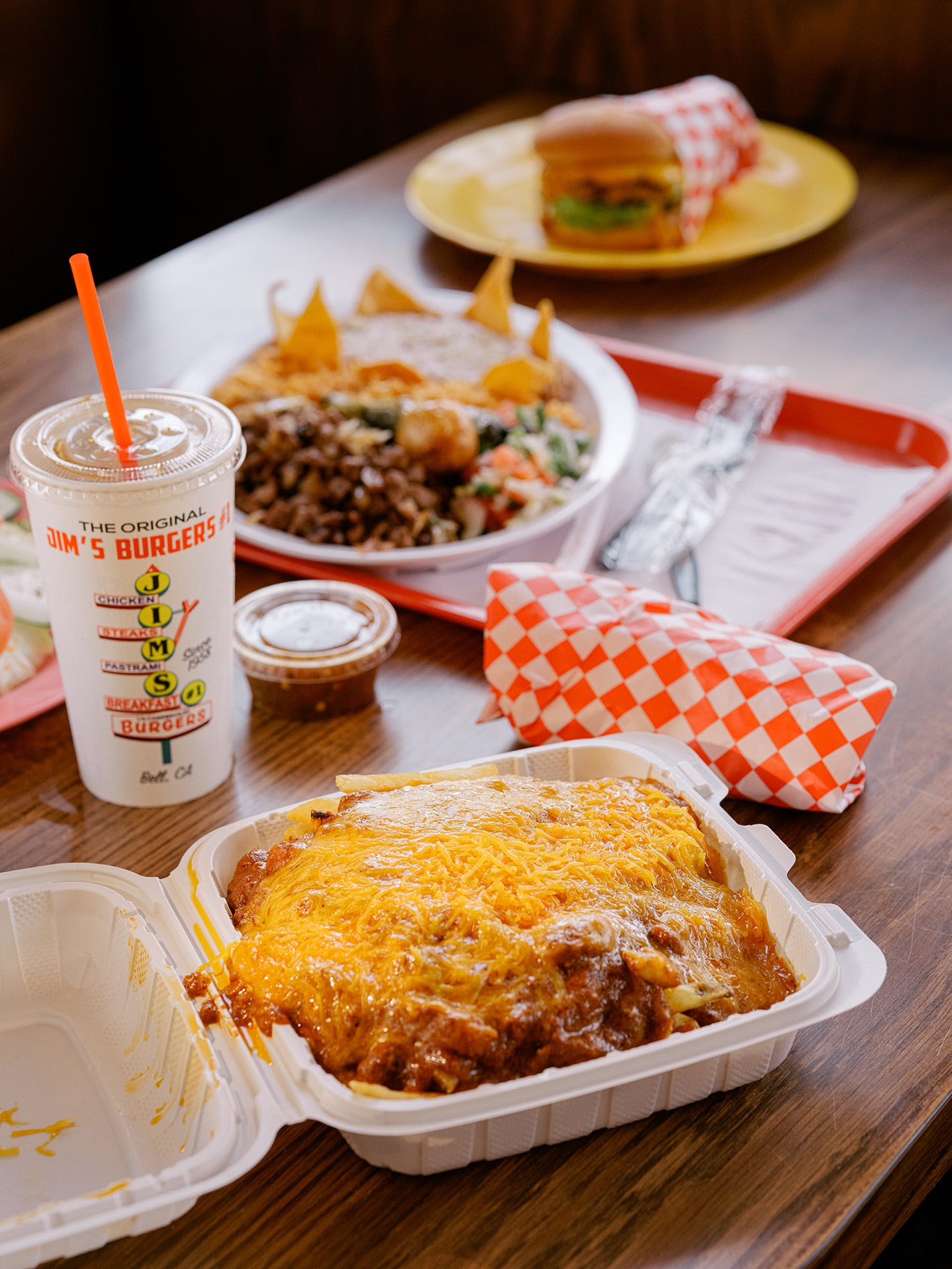
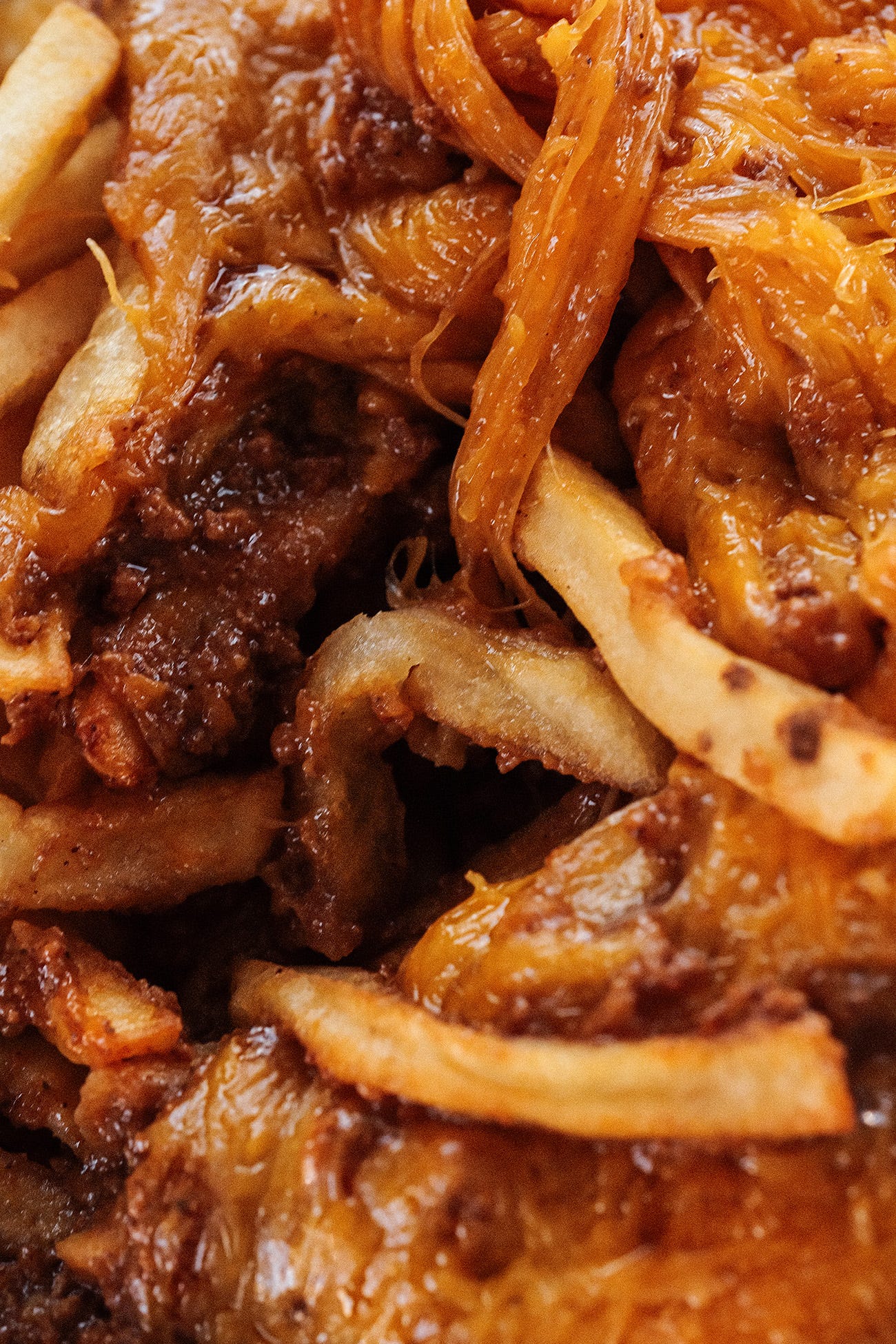
It’s safe to say no one has ever waxed poetic about Los Angeles chili. You know the kind: served as condiment, not quite stew, more of a mortar for welding burger buns to patties and cementing fries into bricks, crowned with a snowdrift of orange cheese, the shade found at construction sites.
Chili never makes anyone’s Instagram in this town, not even Stories. For me, it is more often the last regrettable decision in a night of them. Especially because chili entrées are almost always served in amounts impossible for a sane and sober person to attempt.
But sanity and sobriety are not always within reach, and it’s in those moments that chili finds us. I once lived down the street from the original Alhambra location of The Hat, in Southern California’s San Gabriel Valley, and I still indulge in their pastrami chili fries a few times a year. Ordering a tamale from the Original Tommy’s—submerged in a paper boat of chili thickened with masa harina, capped with a slice of American cheese and round of tomato—is a canonical L.A. experience.
I’d recommend some other places, but if you live here long, chili will appear, like magic. You’ve probably passed a burger spot with chili on the menu dozens of times on your commute. You go there even though the fries aren’t that good—always that thick, soft kind that doesn’t taste like much—because they all possess that all-important Southern California commodity: They are on the way. It was a five-minute stumble from my first college apartment in Westwood to a burger stand students called Buck Fifty’s, served swimming in a vermilion slick of grease that stained every surface that came close. Since then, I’ve lived in a dozen different zip codes in Los Angeles and Orange Counties, and this Mexican burger stand menu has always been within reach.
The history of chili in America is one long shouting match that everyone enjoys too much to declare a winner. As the food scholar Charles Perry put it: “Chili is a vernacular dish, and one that was long considered rather déclassé. It was not born in the spotlight, and its history is bound to be hazy.”
Still, politicians in Oklahoma, Texas, and New Mexico have all attempted to pass resolutions making it their state dish. (Only Texas succeeded, in 1977.) The late Arizona statesman Barry Goldwater once rose to denigrate Texas chili in a speech on the Senate floor, a conflagration that culminated in an official senatorial chili cookoff and a cookbook collecting the recipes.
Southern California chili heads are much more relaxed: less talking, more eating. There aren’t really hard rules for what constitutes Los Angeles chili. You can find chili with all kinds of regional influences here; our recipes are so glibly transgressive, so liberal with thickeners and beans, that they unite chili purists from all major regions in disdain.
Elizabeth Taylor helped make the chili famous at Chasen’s, a Hollywood haunt owned by David Chasen that shuttered in 1995. But Frank Tolbert, a newspaper columnist and house stylist of the Texas chili establishment, was firm if diplomatic: “A real chili buff wouldn’t give Dave’s product a passing grade. It is actually a fine stew, scented with chili powder.”
At El Cholo Mexican Restaurant, the oldest still-operating restaurant in the city of Los Angeles, it’s on the menu as chili con carne, though the server also referred to it as chile Colorado when he set the plate down. In either case, the menu suggests the restaurant began serving it in 1927. Chili con carne, most associated with Texas, is believed to have originated with Mexican women running open-air food stands in San Antonio in the 1880s; their colorful, bold entrepreneurship earned them the moniker Chili Queens. This style shuns beans and thickeners, instead relying solely on meat and simmered chile peppers. El Cholo serves the dish as a main course in a bowl, with a side of tortillas, much like they do in Texas.
Midwestern chili variants abound in Southern California as well. “Chilli,” Illinois-style, dates back to 1909, incorporates beans, and is spelled with two l’s, the second of which stands for love, according to Springfield restaurant lore. The dish was the creation of Greek immigrants influenced by a spiced, minced meat called kima, which traveled to South Asia via keema curry, a Burmese version I first had in Culver City.
Around the time chilli was created, Greek restaurateurs in Michigan pioneered a seasoned, minced meat gravy called Coney sauce to accompany the eponymous hot dogs, an example of which is served at Pink’s Hot Dogs in the Fairfax neighborhood of Los Angeles. A Greek immigrant opened Skyline Chili in Ohio in 1949, and his recipe, much like the Greek dish makaronia me kima, is often served over spaghetti, a dish you can find at Bob’s Big Boy or Chili John’s in Burbank.
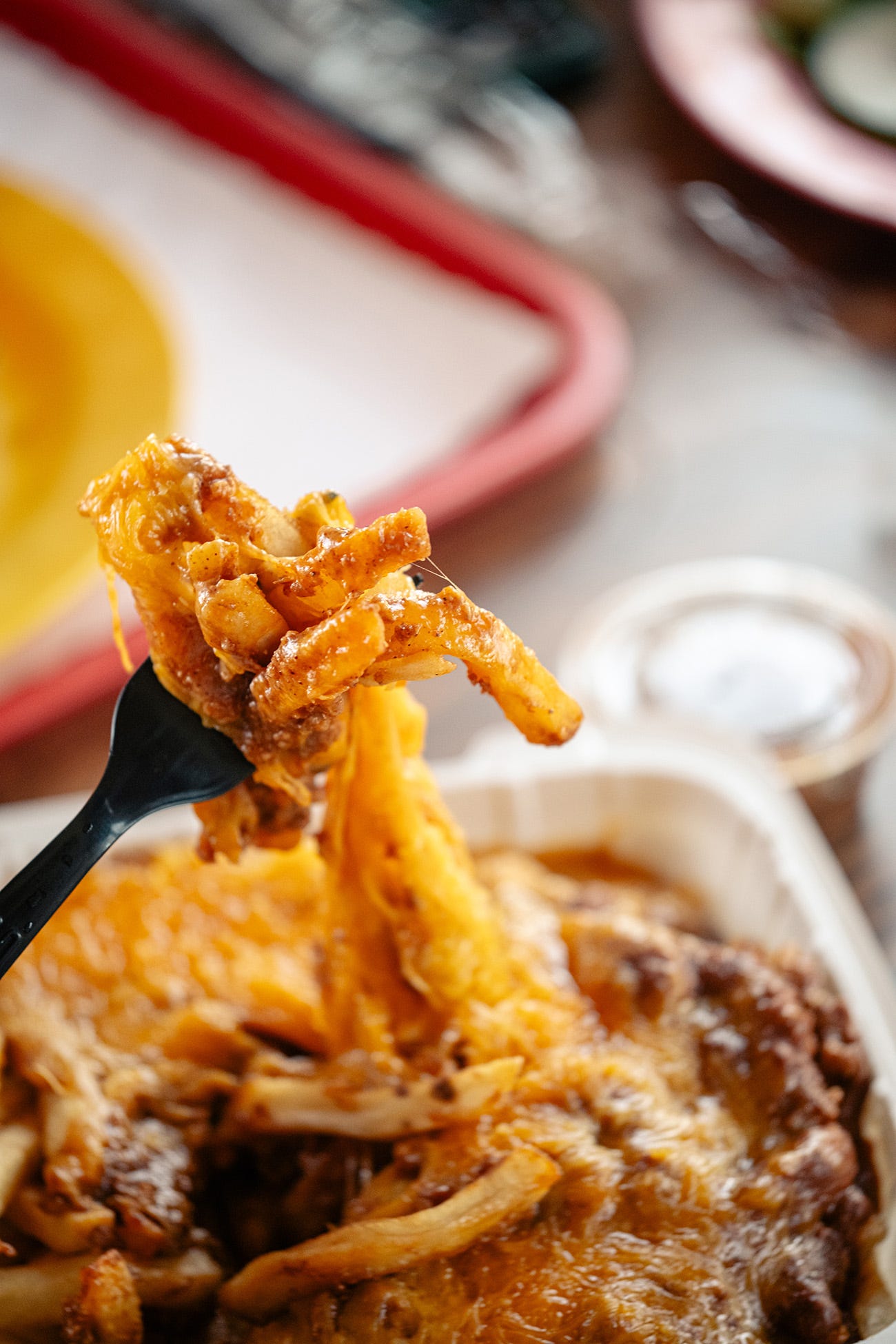
But there’s really only one kind of chili found in all over L.A.: a smooth, rust-red gravy of finely ground beef thickened with flour or maseca and seasoned with some mix of cumin, paprika, allspice, cinnamon and chile powder, what Tolbert called “the dreadful stuff masquerading as chili in 9 out of 10 cafes.”
So why did chili become one of this city’s most ubiquitous foods? I guessed the answer lay somewhere within the tangled genealogies of Southern California’s named burger stands. Could they all be related somehow?
The more of them I visited, the more similarities I spotted, like a small town where everyone has the same kinds of noses and jawlines. Drive around a lot and you’ll notice these burger stands all use the same set of names. A lot of them have numbers in the name, indicating a franchise, but most of the other numbered locations seem to be missing. All the menus have chili and pastrami. And they usually serve some of the best Mexican American food—specifically, breakfast burritos—around.
I followed the trail to an unusual density of burger stands in a concrete quadrangle bordered by the 105 and 110 freeways and the Los Angeles River, an industrial wetlands south of downtown Los Angeles once known as the city’s Rust Belt.
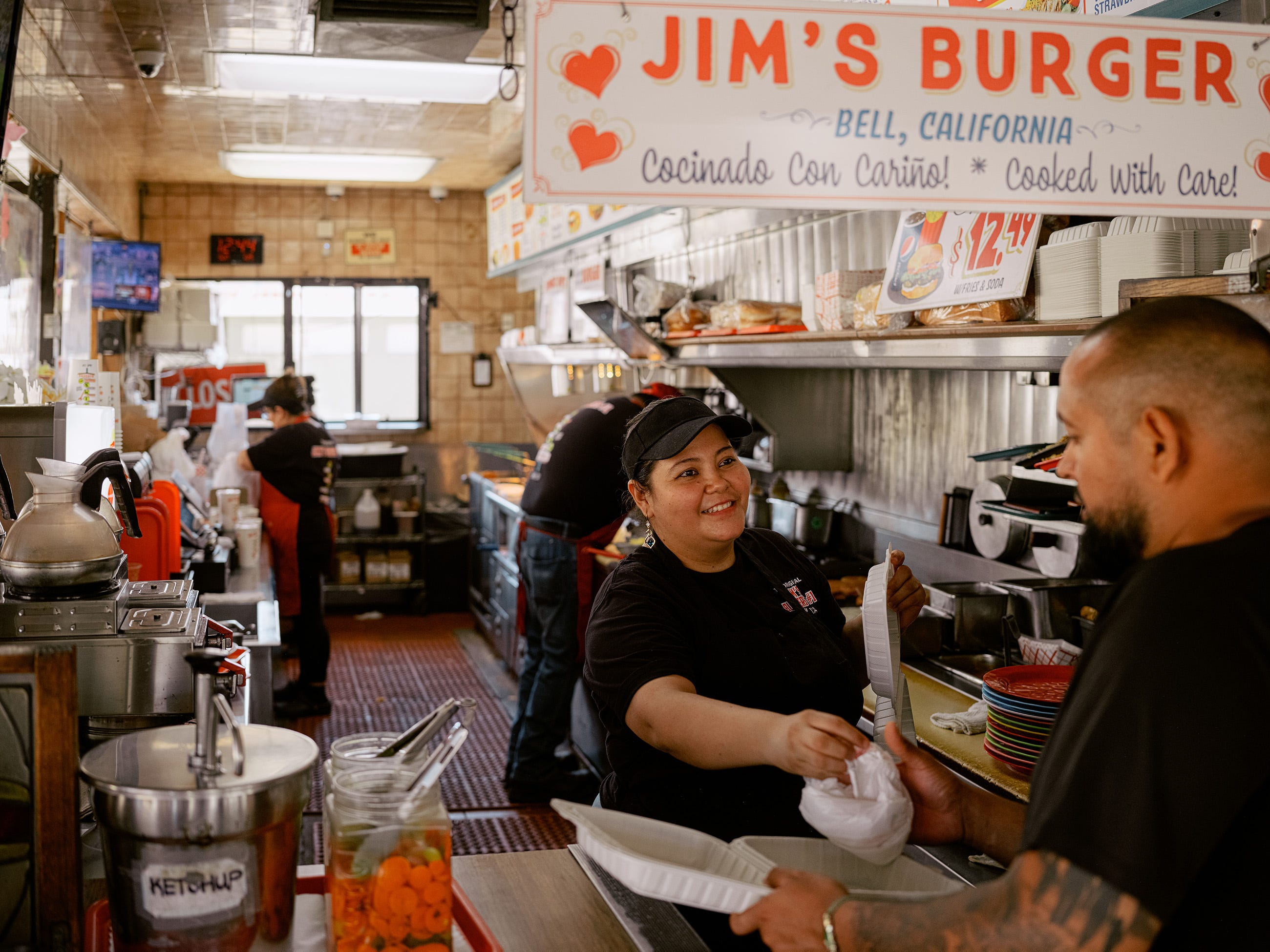
It turned out this region is home to the number-one stores of the burger chains like Jim’s, Apollo’s, Troy’s, Dino’s, Chris’s, Gus’s, and Douglas Burger.
When I began listing the names of all the original stores to Tommy Karmos, 55, the owner of Jim’s Burgers Number 1 in the city of Cudahy, he laughed.
“Yep, recognize a lot of those names. A lot of those guys used to work for my dad,” Karmos said.
Karmos and his father took over Jim’s Burgers in the 1970s. The restaurant was founded in 1958 by Jim Angelopoulos, a Greek immigrant who came to America at the age of 15 and found work at a soda fountain in Decatur, Illinois.
Chili and burgers featured heavily in Angelopoulos’s eponymous restaurant. He was a shrewd businessman but generous with his recipes, said Georgia Alevizos, his daughter. There’s even a family legend that the burger recipe at In-n-Out was influenced by Jim’s.
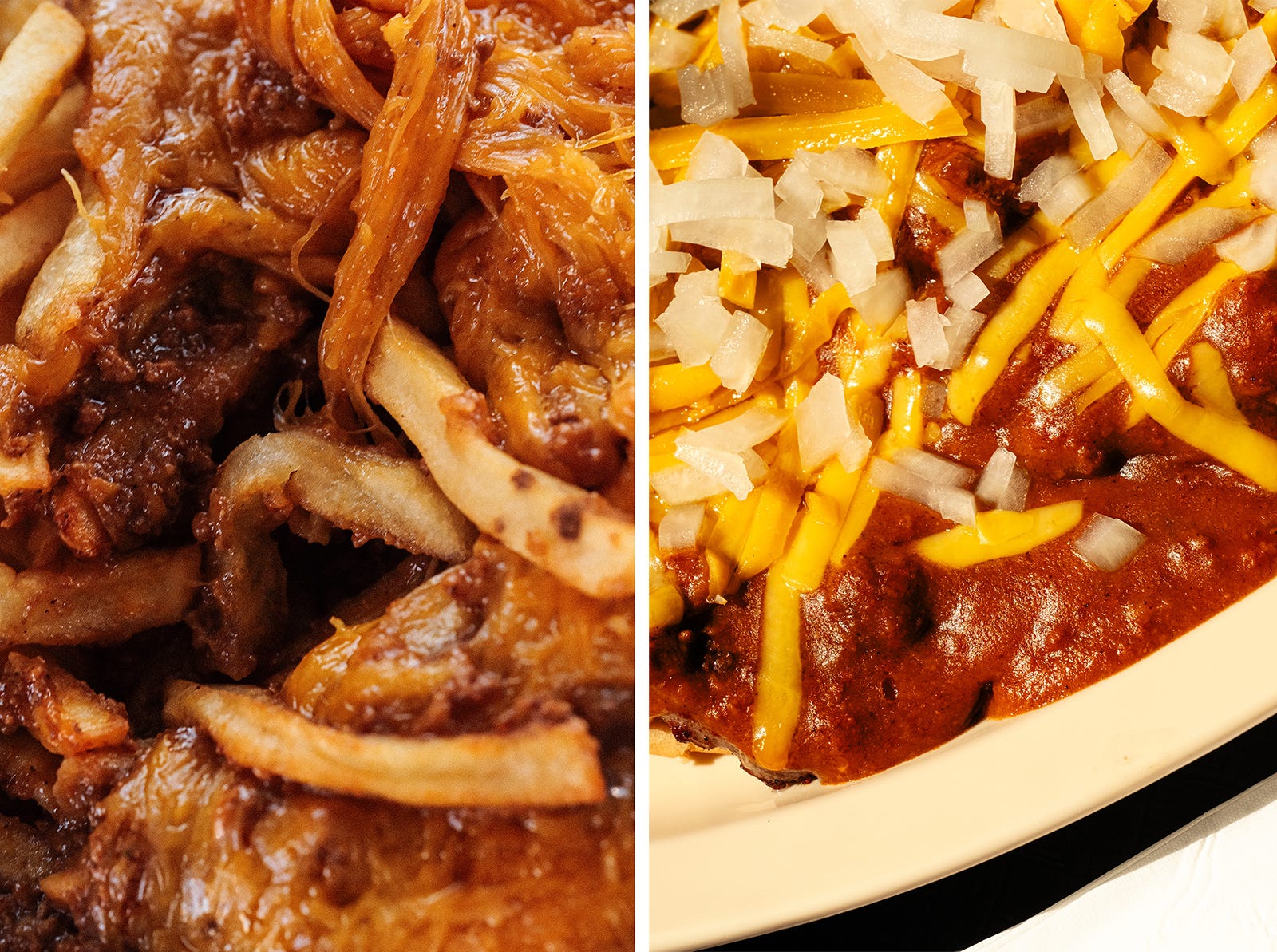
When they came west, their generous, satisfying food quickly caught on in neighborhoods where everyone was shouldering long shifts and lengthy drives home. Angelopoulos felt there was enough opportunity to go around, Alevizos said. He always gave his blessing to employees who wanted to start new restaurants and didn’t charge a fee to use the name. He didn’t care if new franchisees changed a letter, picked a name that sounded similar, or even if they picked a new name.
“My dad just gave it to them. He just believed that there’s always enough business to go around if you’re a hard worker and if you’re honest,” Alevizos said.
The burger stands were an open-air redesign of the Greek diner concept, according to Alevizos. But they never saw themselves making Greek chili or any other kind of Greek food, said both Karmos and Alevizos. They wanted to create a successful business, which meant serving American food, Karmos said.
“We were Greek inside the house, but not really out,” he said.
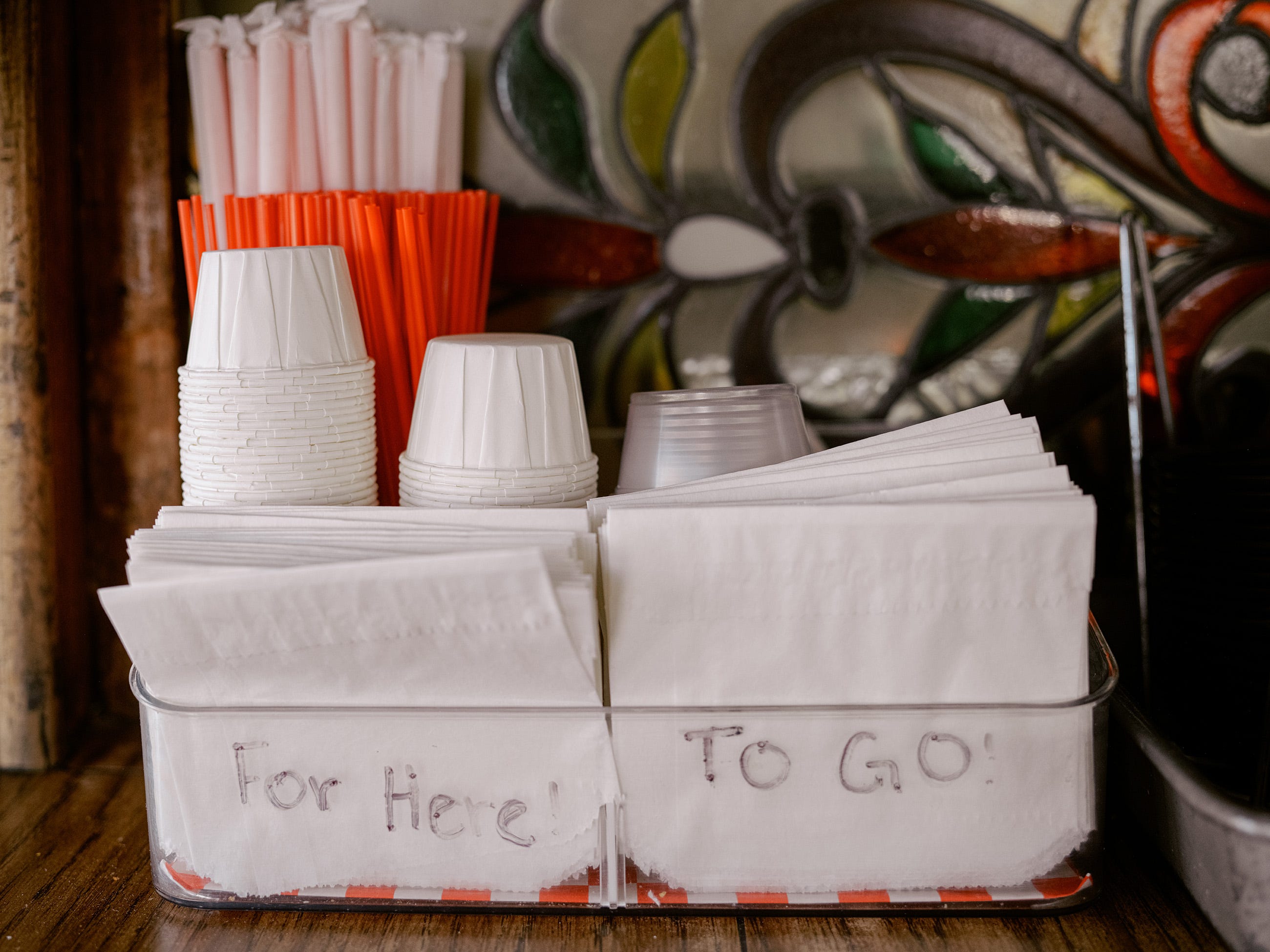
But there are still hints of Greek identity at many L.A. burger stands if you look. At the Jim’s Burger location two blocks over, next to the register, there is a stack of distinctive blue Greek diner cups next to the soda machine and a Greek salad on the menu. And Chris’s Burger down the street serves a chicken tzatziki burrito.
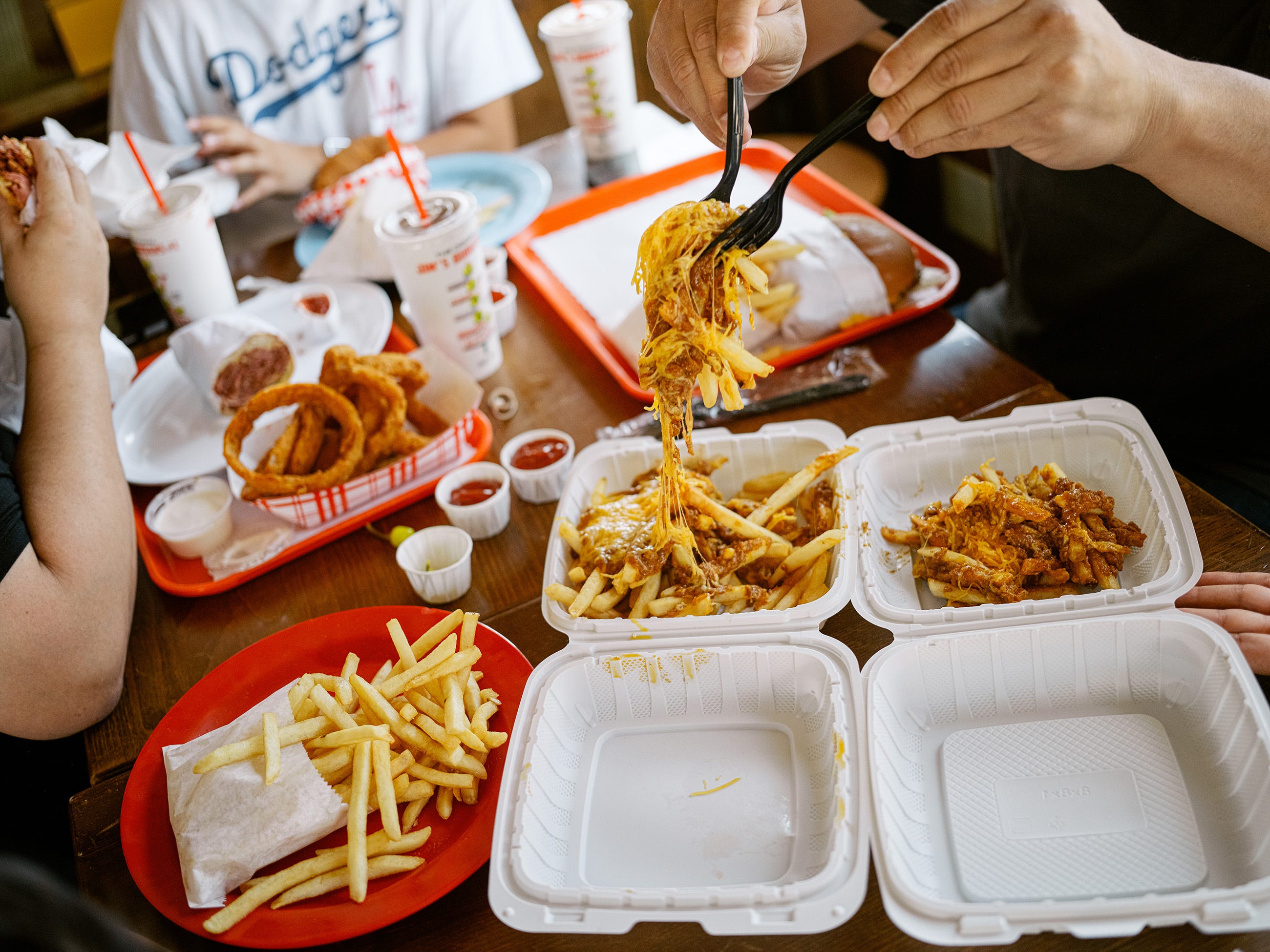
Chris’s also serves a chili burrito, perhaps a reflection of the fact that the city of Cudahy is now 96 percent Latino. At Douglas Burger, a nearby burger chain started by a former Jim’s employee, they serve an old dish called chili size, essentially an open-faced hamburger topped with chili. Chili size was popularized at Ptomaine Tommy’s Chili Parlor, a Lincoln Heights restaurant that was one of the first—if not the first—to serve it in Los Angeles.
Each time the burger stand changed owners and neighborhoods, it absorbed a different group’s ideas about what American food should be. And today no two Tim’s, Jim’s, Tom’s or Tam’s are exactly alike.
Greeks opened many of the first locations, but as Los Angeles grew more diverse, so did the ownership of its burger stands. Today, many are run by Mexican, Central, and South Americans. Fatburger is under corporate ownership now, but it was started by a Black woman, Lovie Yancy, in 1947. And the other day I visited Peppi’s, a Korean-owned burger stand in Fontana that opened in 1946. Chili and pastrami are on the menu, but it’s best known for beef bulgogi.
I like to imagine all these burger shops are related. If you look at their distribution across Southern California, it’s clear that Angelopolous’ generosity was catching; that his former employees and fellow franchise owners passed on the recipes just as freely as he did. What if L.A.’s named burger stands aren’t copycats but kinfolk? That’s what L.A. chili tastes like to me: a big, complicated family recipe
.

Thanks to everyone that came out for our very first International House of Breakfast with Chef Diep Tran. Special thanks to Neighborhood Seed Exchange for providing seeds and seed talk. An another appreciation note to Koda Farms, Autonomy farms, Yao cheng farms, The Garden of, and K&K ranch.
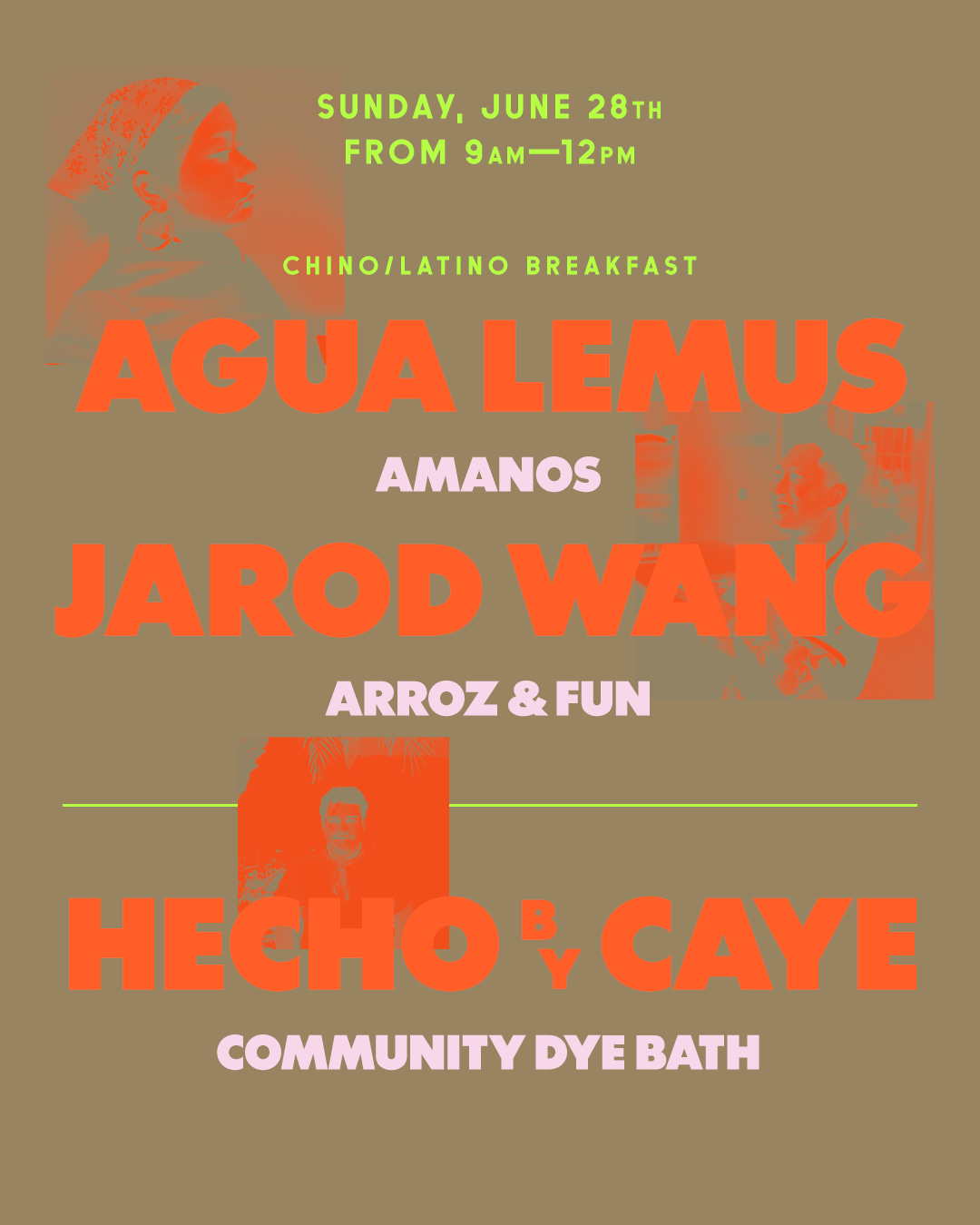
Sunday, June 28th: The next one will be with Chef Agua Lemus of Amanos and Chef Jarod Wang of Arroz and Fun for a Chino/Latino breakfast. As usual, Cipota coffee will be making a special drink for this one (how about those oro blanco cordials??)
Community dye bath by Hecho by Caye, more info soon.
Tickets will be released June 10th and this time with slotted times. Stay tuned.
July 30- Aug 02: We’ll be at Hardcore Art Book Fair in CDMX! Save the Date!
Other news to share from the community!
Híjole y Café: A 3-week food storytelling workshop with Issue 01 contributor and author of Salvi Soul, Karla Vasquez. A 3-week food storytelling workshop which will take place Thursdays at 6pm (June 18, June 25, July 2) online (join from wherever you are). Space is limited, so sign up!