

Shave Makers
Tracking the tradition of this icy treat—the more it changes, the more it stays the same. Its deliciousness, however, knows no bounds.

Apropos of our next International House of Breakfast (tomorrow! Get your tickets!), we’re sharing this article (AND RECIPES!) from Issue 01:Pantry about three shaved ice makers. Chef Nico de Leon is one of our chefs for our event and his previous halo halo pop-up was one of the makers featured.
Enjoy!
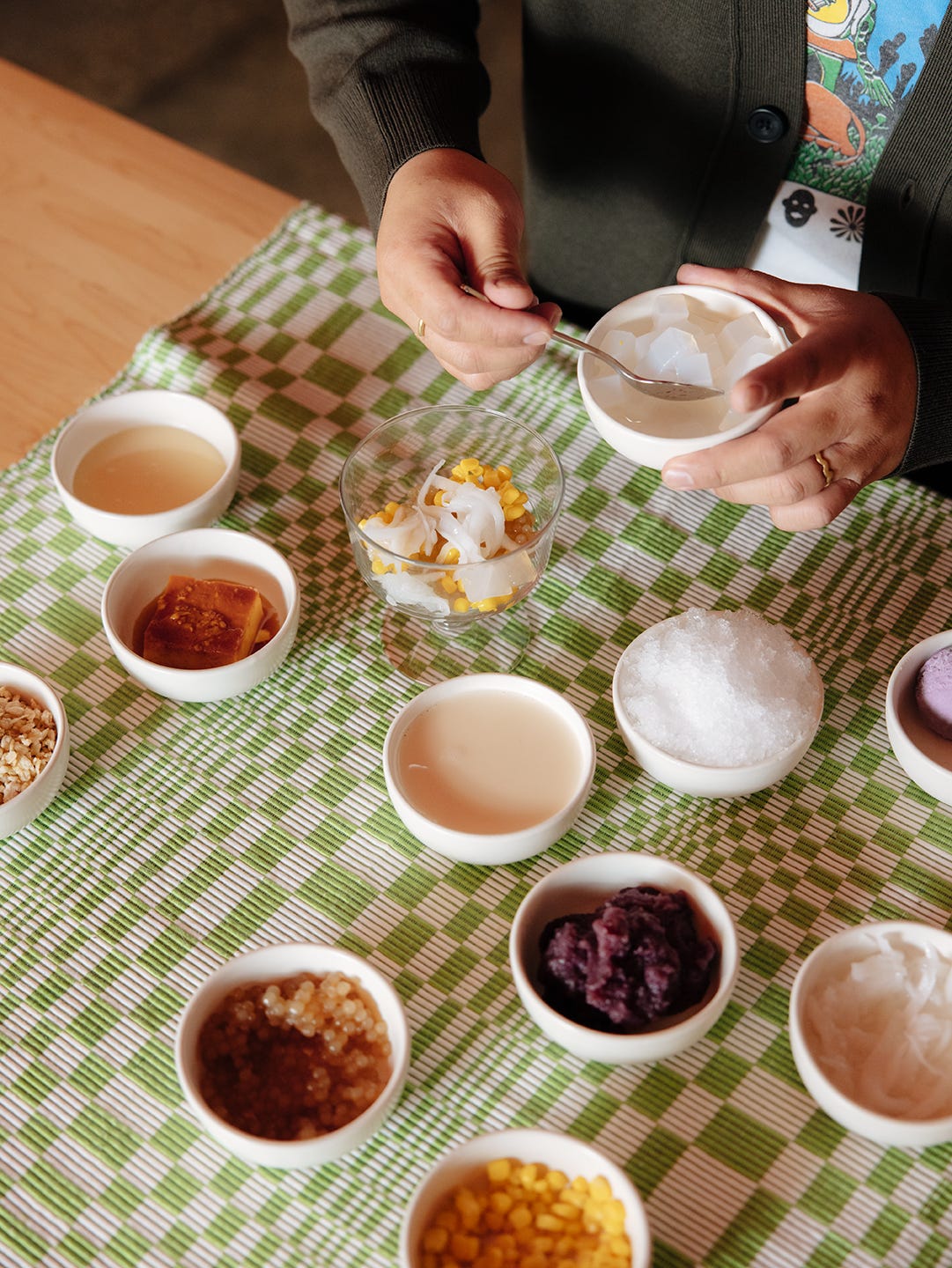
Photo by: Joyce Kim
By Kat Hong
Photos of Camphor and Tito Rudy’s by Joyce Kim
Photos of famiLEE by Sheadon Ringor
“The process seems to start with a foreign dish in its original form, brought in by foreigners. It is then taught to a native cook, who naturally adopts it to the tastes he knows and the ingredients he can get (borrowing, adapting). Eventually, he improvises on it, thus creating a new dish that, in time, becomes so entrenched in cuisine and lifestyle that its origins are practically forgotten (indigenization).” —Filipino food columnist Doreen G. Fernandez, 1988
Shave ice comes in many forms: granizado in Cuba, where shards of ice are studded with warm, spicy star anise; Cambodia’s vibrantly hued teuk kork chus; Filipino halo-halo capped with spell-binding desserts; Pakistan’s beloved street food gola ganda; chamoy-slathered raspados in Mexico; and Korean bingsu, where the ice is shaved so finely, it resembles the country’s mountainous Gangwon-do region during wintertime. No matter what part of the world one finds this icy treat, there is always a fascinating tale behind its arrival.
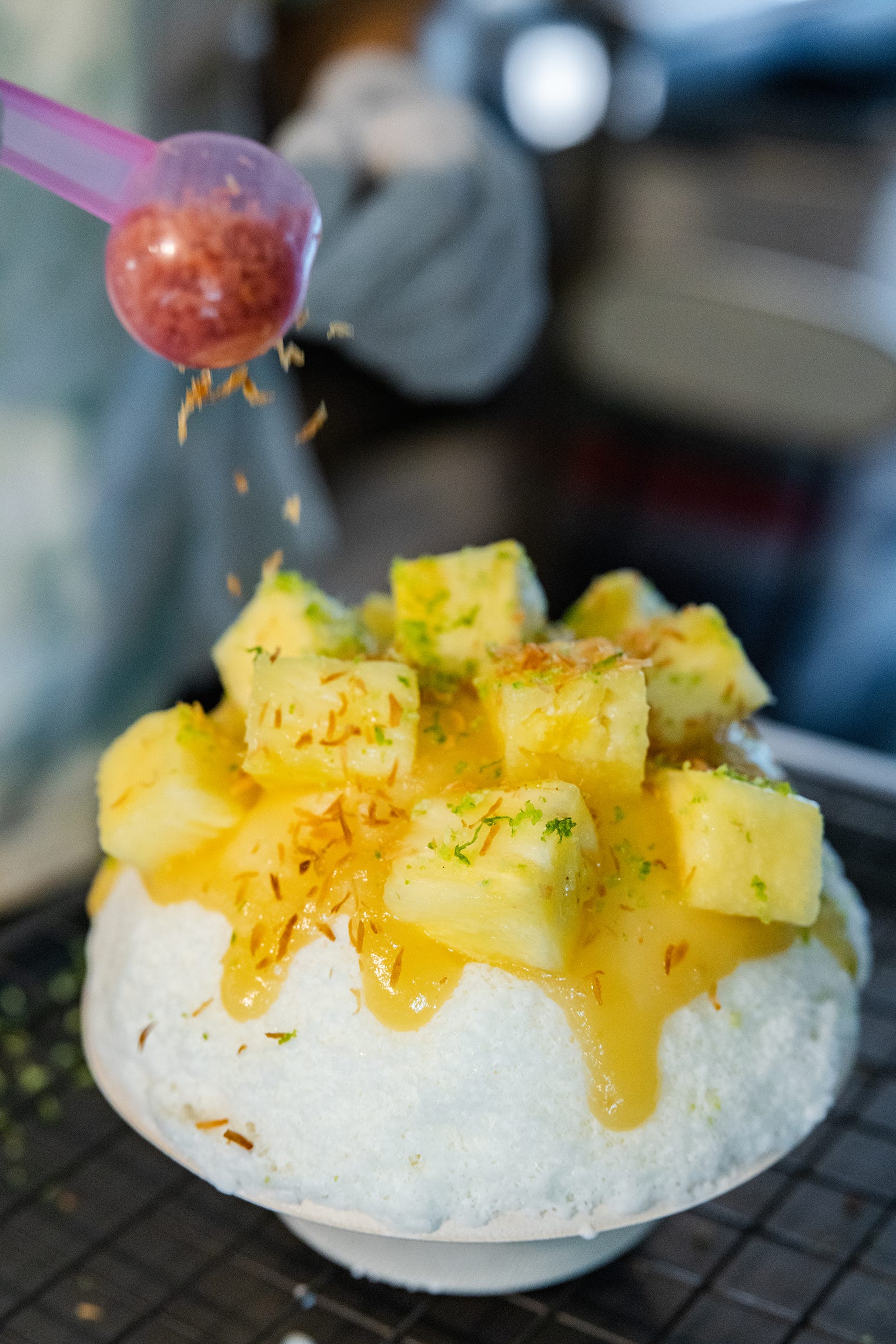
Photo by Sheadon Ringor
The story of shave ice is one of indigenization. Ice, once a luxury item for the ruling class and the very wealthy, eventually trickled down to the masses with the advent of modern refrigeration in places like Italy, Japan, and the United States during the 19th century. Throughout history, expatriates have scraped together new versions of shave ice, longing for a taste of home and using whatever ingredients they could find, often reaching for canned foods and pantry staples. Did you know frosty Colombian cholados can be made with canned lychee, mangoes, or pineapple if fresh fruit is not available? Condensed milk—an American product—found its way to the Philippines and other Southeast Asian countries during World War II, where it was used to feed soldiers before becoming the beloved halo-halo we know today. Common pantry goods, like adzuki beans, can be found on Japanese kakigōri, Chinese baobing, and Korean patbingsu. In short, the story of shave ice encompasses the history of global commerce, class conflict, colonization, immigration, war, resilience, and blade-sharp ingenuity. Plus, it’s pure heavenly bliss to consume in the summer.
For Max Boonthanakit at his L.A. restaurant Camphor, and the couples behind Familee Shave Ice on Kauai and Tito Rudy’s, a modern halo-halo concept in L.A., sweet beginnings extend far beyond the past and stretch into the future, as these shaved ice aficionados create new experiences, delicious things for us to eat, and most importantly, memories. Make some of your own with the recipes they share here.
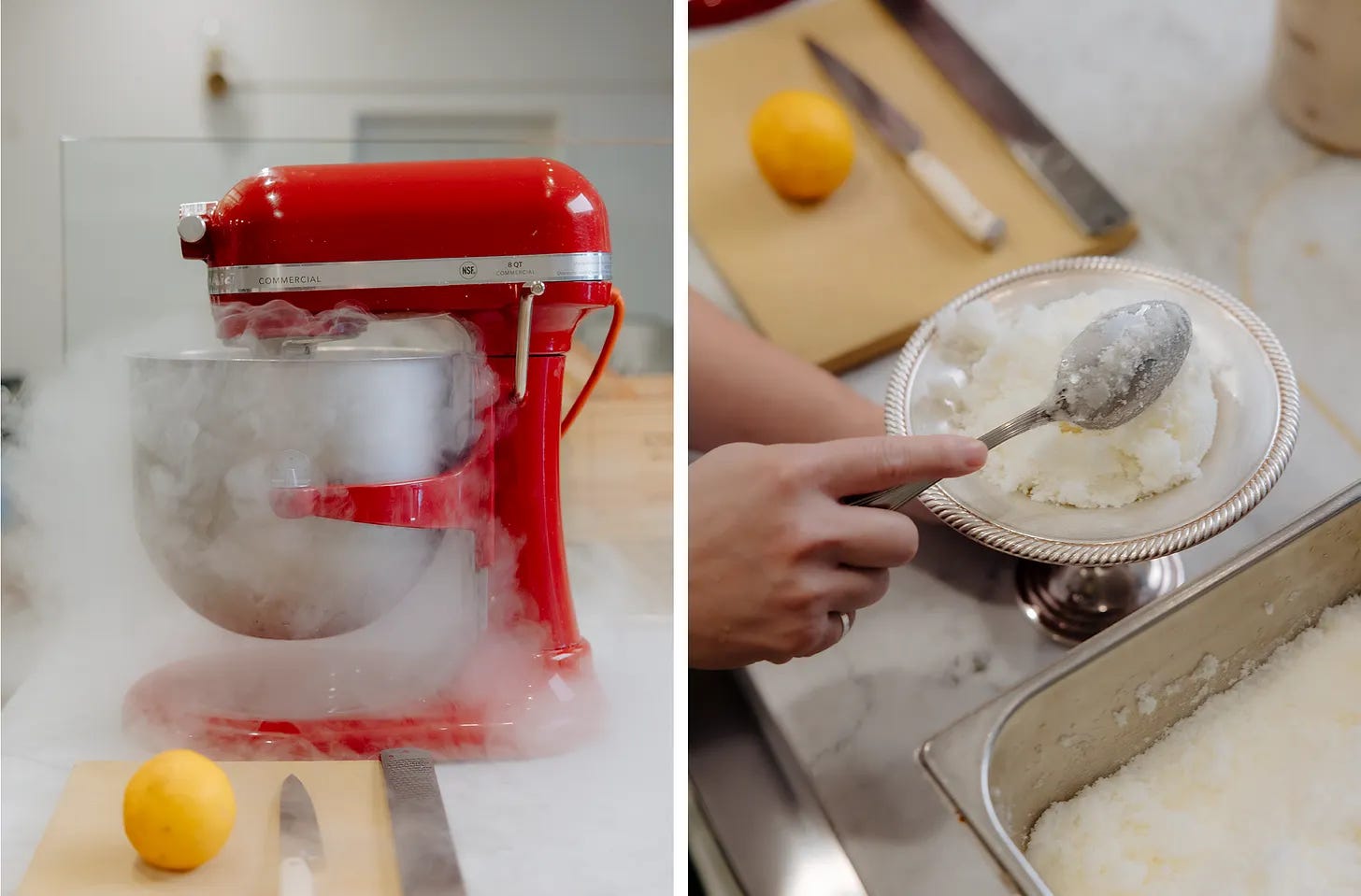
Photo by: Joyce Kim
Co-Executive Chef at Camphor
Speaking with Maxou (Max), one gets the sense that he got into the restaurant business as a way to eat shave ice whenever he pleases. Despite stints in some of the world’s most famous kitchens (Blue by Alain Ducasse, José Andrés’ Bazaar, and Mei Lin’s Nightshade), it’s ice that truly captures Max’s imagination. Now a chef at Camphor, a French bistro with Southeast Asian influences that was awarded a Michelin star in 2023, Max talks about shaved ice with the fervor of a detective getting deliciously close to solving a murder case that’s gone cold.
Raised in Atlanta by Thai and Chinese parents, Max draws on a sprawling, almost anarchical well of influences when crafting his desserts: He begins in the Malaysian restaurants he frequented as a child, then heads into the world of Italian ices, creamy custards, and unnaturally hued treats, proving that inspiration can come from just about anywhere. The result is one of Camphor’s most renowned desserts—a sweet serving of marzipan ensconced in a pile of fluffy ice, topped with Meyer lemon shavings.
How did Camphor’s marzipan dessert come to be?
Max: When I was growing up and going to Chinese restaurants, I would always order the almond jelly or the almond drinks. So, naturally, I fell in love with marzipan. It has that same floral, almond-y taste to it that I love. And my favorite dessert of all time is shave ice. I wanted to combine the two while also making something really lemony and citrusy, so I created a Meyer lemon ice. We don’t shave the ice with a shaver but pulverize it with nitrogen, which causes the ice to freeze, then over-freeze, and become really brittle before turning into powder. It’s a super-light shaved ice, essentially, but it’s really more of a powdered ice. And it’s nice to not have dairy at the end of a meal. Camphor is a French bistro, which means you’re eating a lot of butter, so it’s great to have something at the end to cut through all of that.
What are your first memories of shaved ice?
Max: I had one of those tiny, cheap manual [ice] shavers at home, so I would always make myself shaved ice. And there were times when the blade would get too dull and my mom wouldn’t buy me a new one right away. So I would press the crushed-ice setting on the fridge, add syrup, and just eat that. Later, I became obsessed with Rita’s Ice & Frozen Custard, particularly the blue raspberry flavor. Another thing that sparked my whole “blue ice situation” back then was Burger King’s Ice Age drink.* When that came out, I begged my mom every day before Chinese school, like, “Can we please? I just need this drink.” So, icy desserts have always been an obsession of mine.
*In 2002, as a part of the promotional campaign for the animated movie Ice Age, Blue Sky Studios released a limited-edition Blue Cherry Frozen Float, which featured frozen Minute Maid Blue Cherry slush poured over vanilla ice cream.
What do you find particularly invigorating about making icy dishes?
Max: Ice is the perfect vessel. It’s so clean and pure, so that the flavor will come through no matter what. I like ice because it helps release the flavor [of ingredients] better than a lot of other things. With ice you have structure, you have pockets. It melts on your tongue and everything lasts longer. I wish more people would open more ice places.
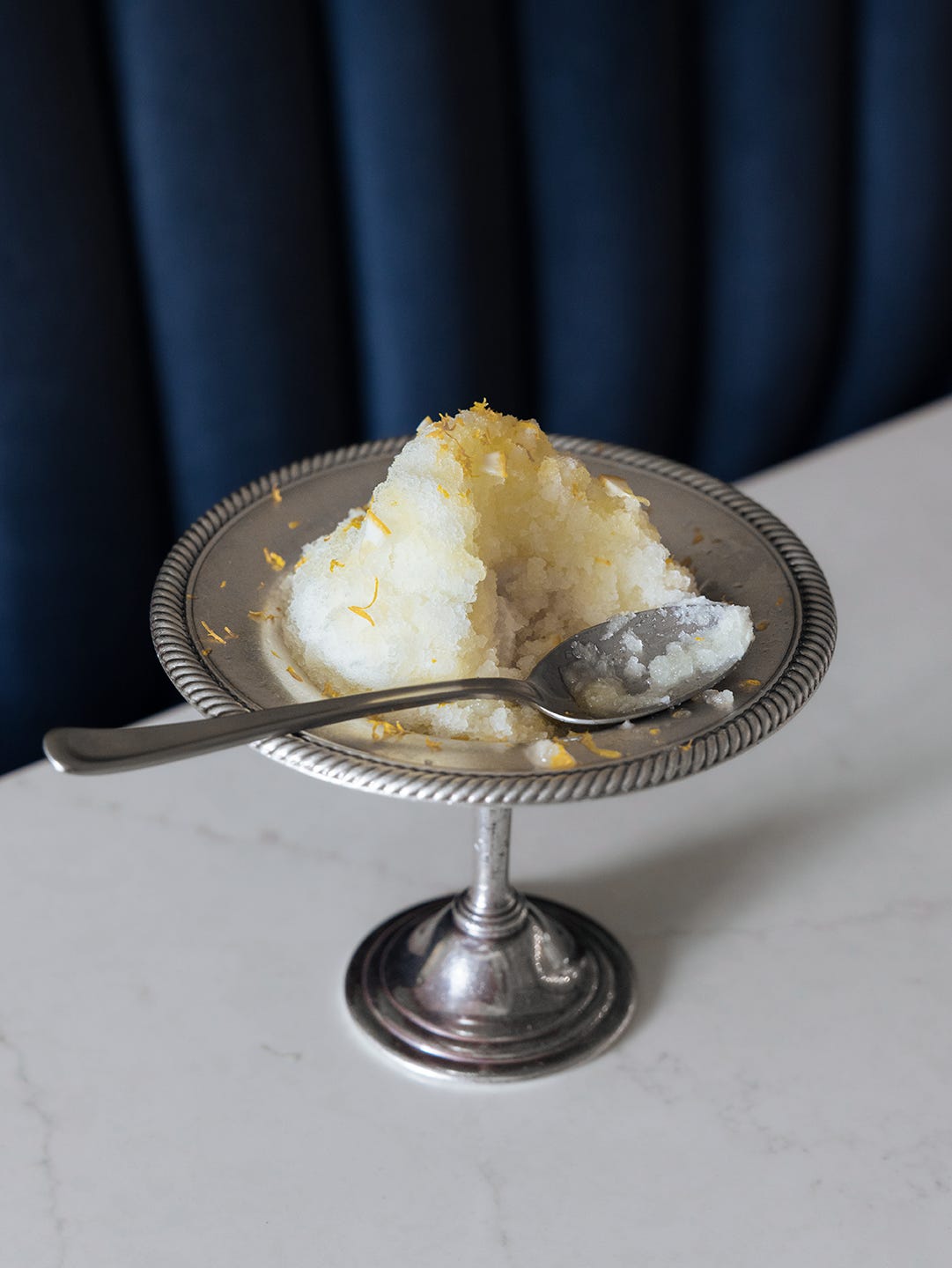
Photo by: Joyce Kim
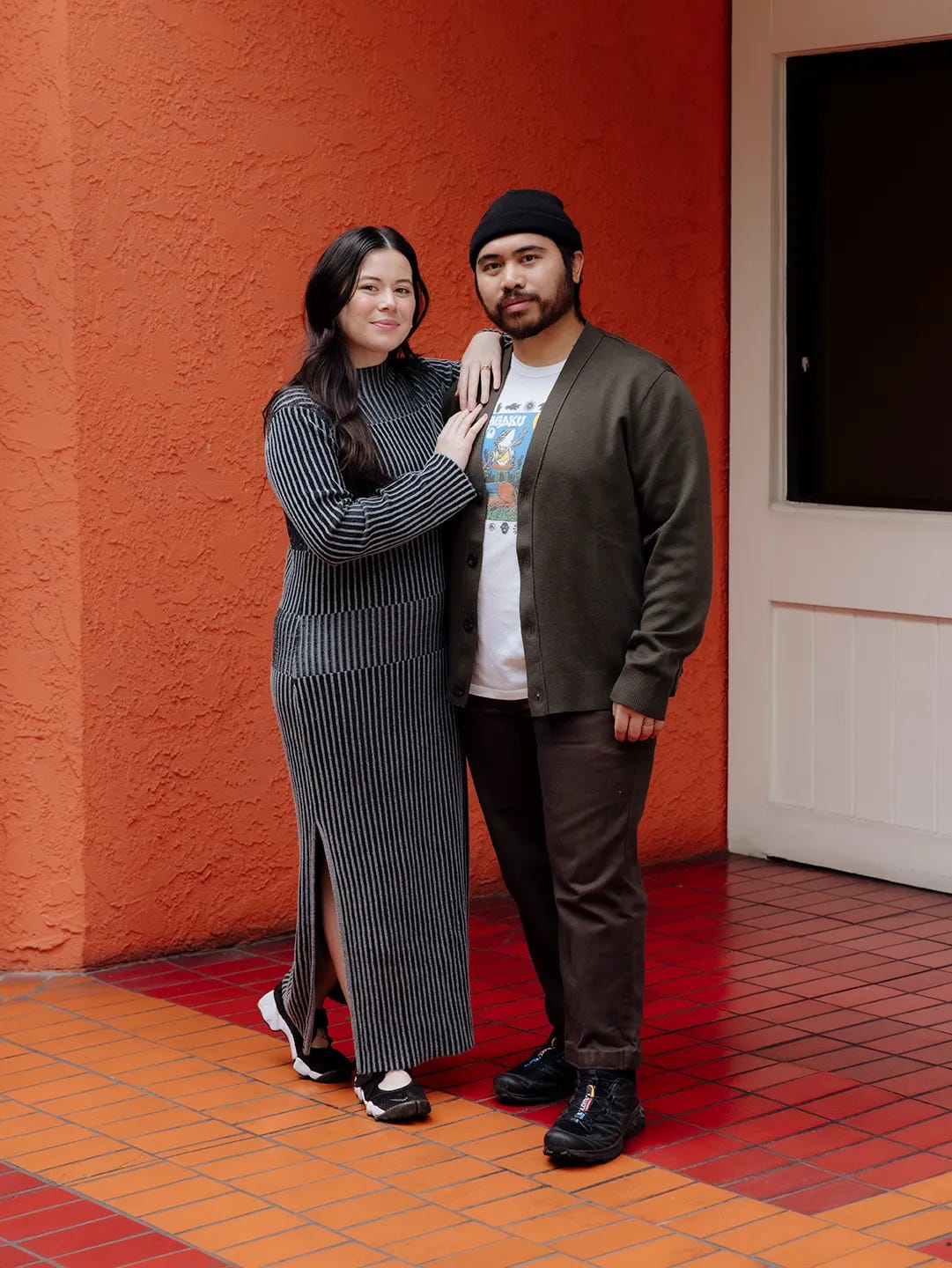
Nico de Leon and Kaylie Miraflores
Like many foods enjoyed in the Philippines today, halo-halo is more than just a dish. The crushed ice and evaporated milk treat, literally translated to mix-mix, offers a glimpse into the complex, often brutal history that led to the creation of what is now considered the unofficial dessert of the Philippines. Halo-halo’s odyssey begins during the Spanish colonial rule (1565-1898), a period when much of the Philippines’ wealth (as dictated by despotic Spain) depended on sugar haciendas, or plantations. Desserts, as an art form, blossomed during this time, giving birth to modern classics such as ube macapuno cake and glossy, golden leche flan. Later, during the Japanese occupation—a short but violent military stunt that took place between 1942 and 1945—one of the earliest halo-halo prototypes swept the nation, capturing the hearts of Japanese farmers and expats. Called mongo con hielo or mongo-ya, the simple dish sees boiled, syrup-laden mung beans spooned over coarse, ground ice and topped with sugar and milk, in a tradition not unlike Japanese kakigōri.
After World War II, with little reason to stay, the Japanese withdrew from the Philippines, but that delicious coarse ice dish remained. Halo-halo, as we know it now, began to take shape. To this day, there is not one set of standardized ingredients, although common hallmarks include a tall, clear glass paired with a long silver spoon, condensed and evaporated milks, canned fruit, fresh fruit, jellies, and flan. Toasted coconut flakes and crispy pinipig (pounded young rice) provide textural snap. Ube ice cream is all but required.
At Tito Rudy’s, a modern halo-halo concept in L.A., the resourceful, ever-evolving spirit of the Philippines lives on through this labor of love. Co-founders and life partners Nico de Leon and Kaylie Miraflores enjoy playing to their strengths (de Leon is an award-winning chef who co-owns Lasita, a funky Filipino rotisserie in L.A.’s Chinatown, while Miraflores boasts over 10 years of food, beverage, and barista experience). Since Tito Rudy’s inception, they’ve served their halo-halo—which features miso-condensed milk and ube ice cream, macapuno coco jelly, and candied pinipig—at pop-ups, a Chinatown kiosk, and as a permanent addition to Lasita’s menu.
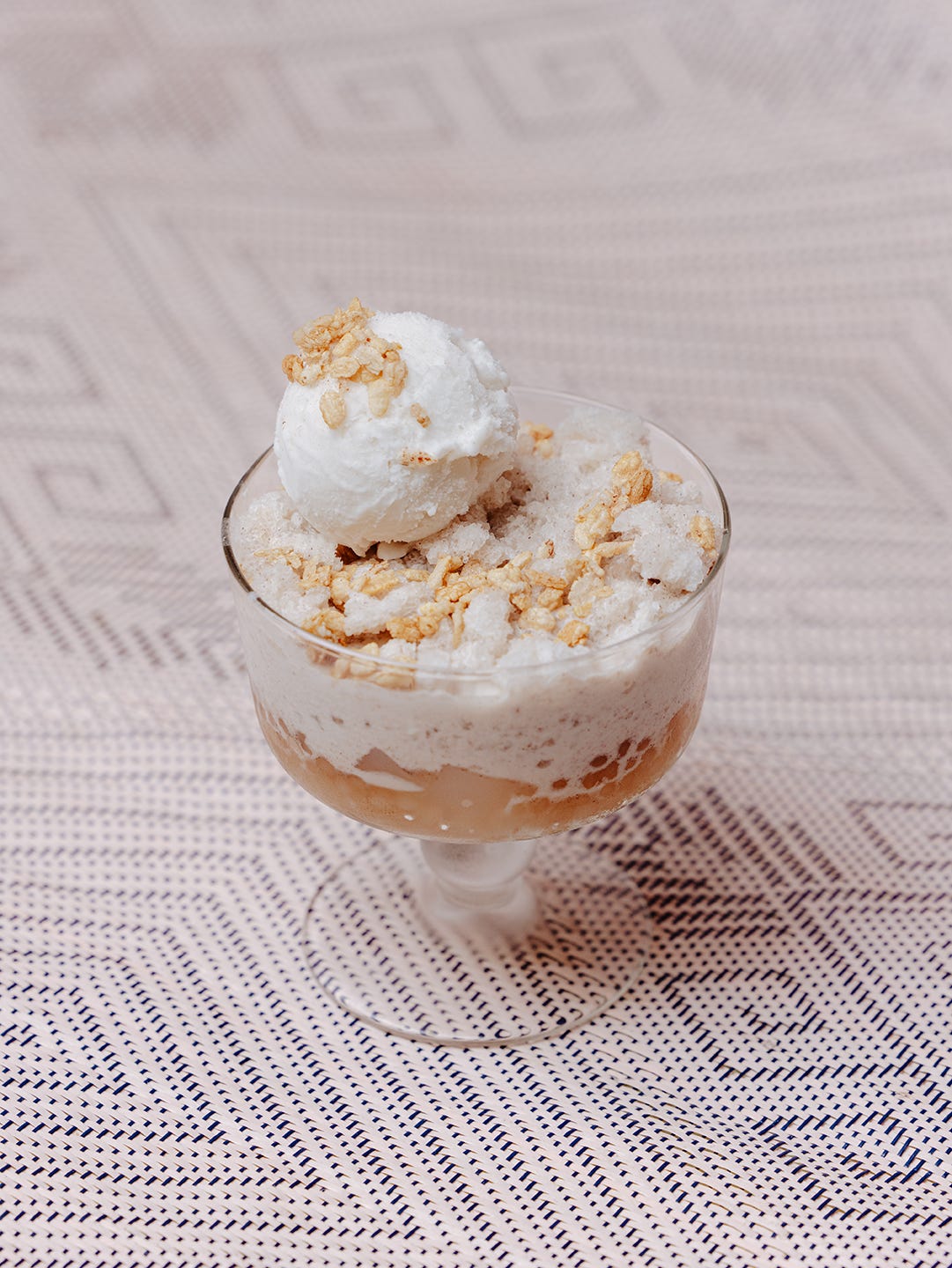
Photo by: Joyce Kim
What memories does halo-halo evoke for you?
Nico: My dad would surprise us with halo-halo growing up. When he came home with all the accoutrements, we knew immediately that after dinner we’d all be enjoying our own customized glasses of halo-halo, sometimes even seconds, if we were naughty. [laughs]
Can you share the origin story of Tito Rudy’s?
Nico: Tito Rudy’s began as a pop-up during the pandemic. Kaylie and I were living in San Francisco and trying to find ways to keep busy. We wanted to have a project together that encompassed all of the things that we love: design, food, and culture. Locked down and confined to our home, we started to peer into our pantries for inspiration. What was in there that we could utilize and be creative with?
What goes into creating a halo-halo at Tito Rudy’s?
Kaylie: We’re picky about the ice, the ratio of the components, and the texture. The level of sweetness, also. We don’t like it too sweet—you don’t want palate fatigue. And you want to taste the quality. We make the ingredients and toppings in-house, and that’s something we’re really proud of.
Nico: When you’re delivering something that’s so nostalgic and personal, you need to make sure that you’re hitting all of the textural points while also providing different notes of, almost feelings. We’re fortunate to live in California, because a lot of our native produce is available here. But not everything is! Like, calamansi is really difficult to find unless your family has a tree, or you have that one tita who hands you a bag at a family party. So, discovering other citrus that speaks to us, or finding other flavor profiles that can mimic or evoke the same feeling, that process reminds us of what our ancestors would do in the Philippines—shop locally, etc. Whether it’s a mile from your barrio or around the corner at your favorite farmers market, Filipinos make do with whatever’s around them.
Tito Rudy’s has existed in many forms. What’s been your favorite iteration?
Nico: The kiosk [in Chinatown.] That was a really fun moment.
Kaylie: We turned it into a seated bar where people could have conversations with us as we made the halo-halo. We were able to see the diversity of people who were attracted to the project. We met people who had never heard about halo-halo before and just stumbled upon us. Some people came because they were curious about the design. And then you had a bunch of Filipinos, Filipino Americans, and titas who were like, I haven’t had a good halo-halo in so long.
Who is Tito Rudy?
Nico: My father. The whole origin story, with the nostalgia I brought up earlier, circles back to him completely. It’s a little ironic because he’s diabetic now. He hasn’t had one of our halo-halos yet, unfortunately.
Kaylie: He keeps telling us, “You need to make a sugar-free one.”
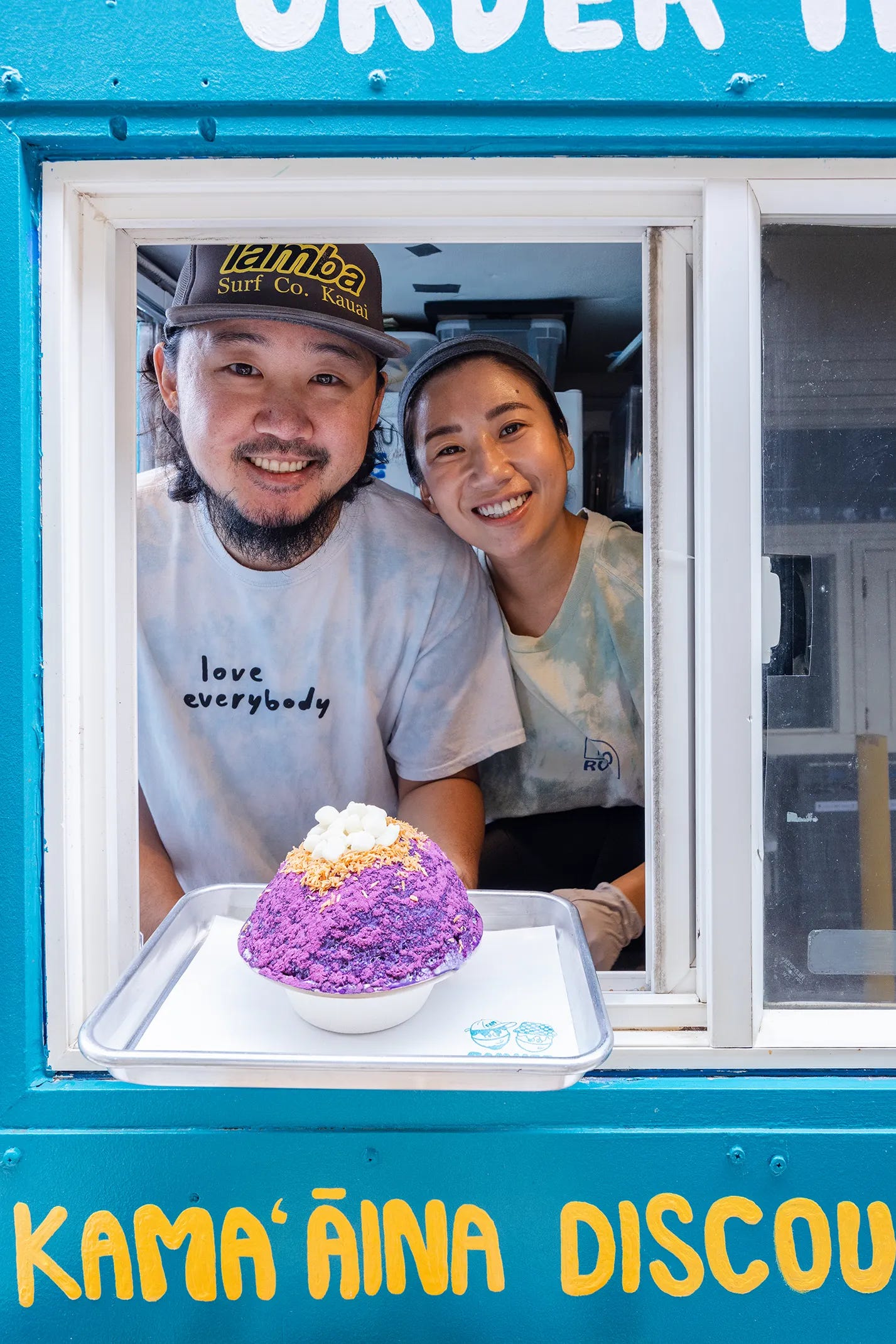
Photo by Sheadon Ringor
Jess and Tim Lee
Bingsu, in its earliest form, was an icy treat reserved only for Korea’s court royalty and high-powered government officials. During the winter, ice was cut from the frozen Han River then put into seokbinggo, or royal ice boxes, a practice that remained until refrigeration was introduced to Korea in the 1950s.
By comparison, Familee Korean Shave Ice could not be more egalitarian: The bingsu truck, run by husband-and-wife duo Tim and Jess Lee, operates off the side of the Kuhio Highway on Kauai and sources its ingredients from local farms, friendly neighbors, and the bounty found on trees in the Lees’ backyard. The truck, which offers traditional and modernized takes on Korean bingsu, has become a hit, attracting tourists and locals alike with its playful flavors, seasonal fruit, and puns galore (each flavor is named after a Lee family member, and the descriptions are packed with a poet-laureate amount of wordplay).
Do you have any strong memories of shaved ice or bingsu as children? And if so, how did they influence Familee?
Jess: When I was really young, my dad and his friends played ping-pong in our backyard. After their games, they would go out for bingsu and he’d bring one back for me, which I shared with my grandma. We’d eat it on my bed. So for me, bingsu brings people together.
Tim: I’m from Los Angeles, but we came to Hawai’i a lot as kids. My dad loves it here. He’d always joke around and say something like, “Oh, if someone opened a bingsu shop here, it would do really well.” He wasn’t serious, and it became a running joke in our family. But when Jess and I met during the pandemic, we both were looking for something new for our careers.
Jess: And that’s how [Familee] started.
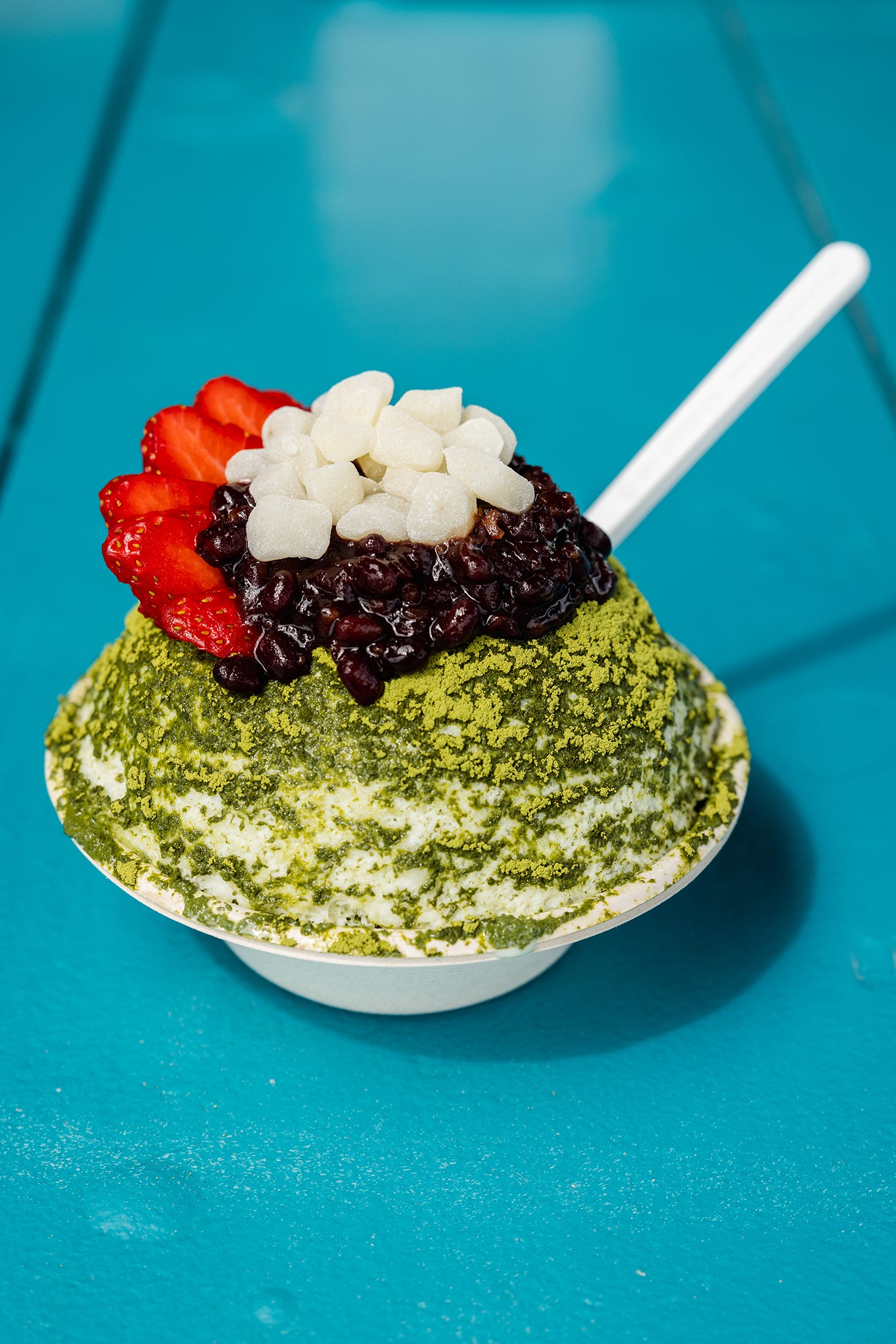
Photo by Sheadon Ringor
When did you learn to make bingsu?
Tim: Although we grew up eating it, we didn’t know much about bingsu from a business perspective. So, we spent about a year researching everything we could and traveled to Korea in 2022.
Jess: Korean bingsu is next level. Before our trip, I reached out to my family in Taegu and they gave us a list of places to try. So, there were some days that we would eat, like, four bingsus a day. There were unique flavors trending there, like mugwort, corn, grapefruit, salt and cream, and tomato bingsu. We got a lot of inspiration from what we saw in Korea, especially around how creative you could be.
It’s interesting to think of bingsu in the context of Kauai, where there is not a large Korean population.
Tim: I can probably name every Korean person.
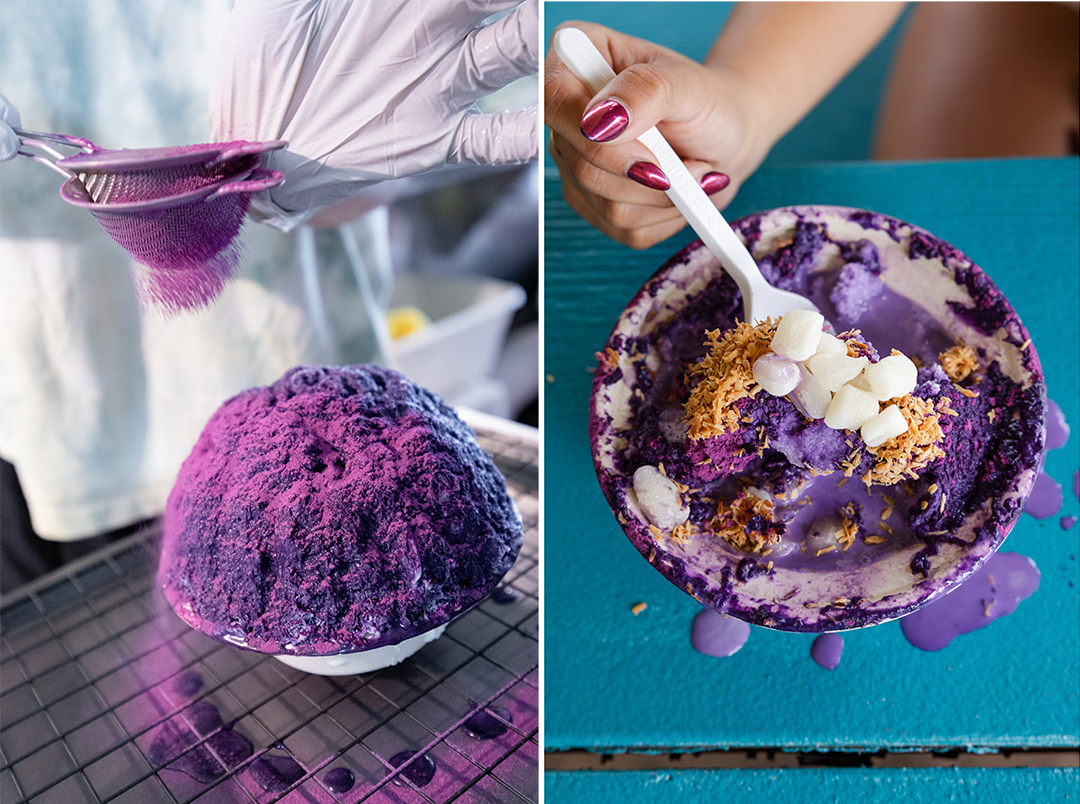
Photo by Sheadon Ringor
How has that been?
Tim: Once we opened, all 10 Koreans on the island somehow found us and they loved it. We were told that when a new business opens on the island, everyone comes. And we found that to be true. [Bingsu] is something new for a lot of [customers].
The inspiration for Familee’s menu comes from your family members. Walk me through some of the flavors.
Jess: Everyone calls Tim’s dad Pa, and one of his favorite places on Kauai is the Nā Pali coast. So he became the “Nā PaLee.” Plus, he loves mangoes, so that’s how we came up with that one. Another one is The Sweet Kamja, which represents my brother-in-law, Kam. He loves ube and kamja in Korean means sweet potato. So we made his flavor sweet potato, even though it’s not a 100 percent translation match.
How do you feel about the word authenticity?
Jess: That’s what we’re trying to offer, authentic Korean bingsu. There aren’t many Koreans on Kauai compared to Southern California. Language and food have that way of pulling at your heartstrings. They’re such a deep part of who we are and how we grew up. So, to be able to carry something as simple as bingsu here to Kauai is so special to us.
RECIPES
Camphor’s Marzipan Sorbet
⅔ cup marzipan
